Midwest bird watching
  • Home
  • Birds
    • Backyard Birds >
      • American Goldfinch
      • American Robin
      • Barn Swallow
      • Baltimore Oriole
      • Black-Capped Chickadee
      • Blue Jay
      • Carolina Chickadee
      • Dark-Eyed Junco
      • Downy Woodpecker
      • Eastern Bluebird
      • Hairy Woodpecker
      • House Wren
      • Mourning Dove
      • Northern Cardinal
      • Red-Winged Blackbird
      • Rose-Breasted Grosbeak
      • Ruby-Throated Hummingbird
      • White-Breasted Nuthatch
    • Non-Feeder birds >
      • Waterfowl
      • Wading Birds, Shorebirds & Gamebirds
      • Raptors
      • Doves, Cuckoos, Nighthawks & Whip-poor-will
      • Warblers
      • Small Non-Warbler Perching Birds
      • Woodpeckers & Kin
      • Sparrows & Kin
      • Swallows, Hummingbirds & Swifts
      • Blackbirds
  • Blog
  • Resources
    • Book Reviews
    • App Reviews
    • Free Downloads
    • Other Resources
  • Videos
  • Presentations
  • Photo gallery
  • Contact
  • Birding Locations
  • Checklist
  • Eliminate Predators
    • Cats
    • Others
  • Attracting Birds
    • Bird Feeders
    • Nesting Boxes
    • Plants
    • Food
    • Tools
    • Water Supply

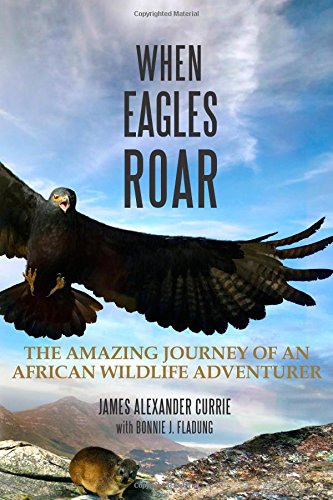
When Eagles Roar

12/4/2014

 
Picture
If ever there was a book that would keep you on the edge of your seat, this is it. I’ve read my share of fiction suspense novels, but they cannot compare to the real life adventures in “When Eagles Roar”. Most of the time, I found myself fiercely gripping this book, eyes as big as saucers, my heart pounding, as I feared what would happen next. The author’s incredible storytelling ability pulls you into the action right alongside him. You’ll imagine yourself facing an unimaginable danger, snapping your head around looking for cover, all the while trying to remember the mantra: “Don’t run. Look at me and I’ll tell you what to do”. You’ll have moments to catch your breath, but keep your tissues handy; there are stories in this book that will bring tears to your eyes and make your heart ache.

Along the way, you’ll find that you’ve gained tremendous insight into nature. No guide book compares to the author’s ability to explain the thought processes and actions of a variety of animals, from insects to elephants. While his depth of knowledge is outstanding, it’s his ability to relay that information in the form of a complete story that is truly riveting and will captivate you throughout this book. 

All this from a gentleman that I only knew was an outstanding birder and star of Nikon’s Birding Adventures television show. I have watched every episode of that show more than once, following Mr. Currie through my TV screen to exotic locations to see the rarest of birds, learning from him as he tells intriguing stories about each bird. Now that I know his knowledge extends far beyond birds, I’m hoping for a TV series or movie based on this book that includes all of his adventures!

The only caveat about this book is that there are occasional moments when adult language is used. Of course if you’re about to be eaten by a lion, killed by a puff adder or trampled by an elephant, you might utter an expletive or two!
Winter Wren

11/4/2014

 
Picture
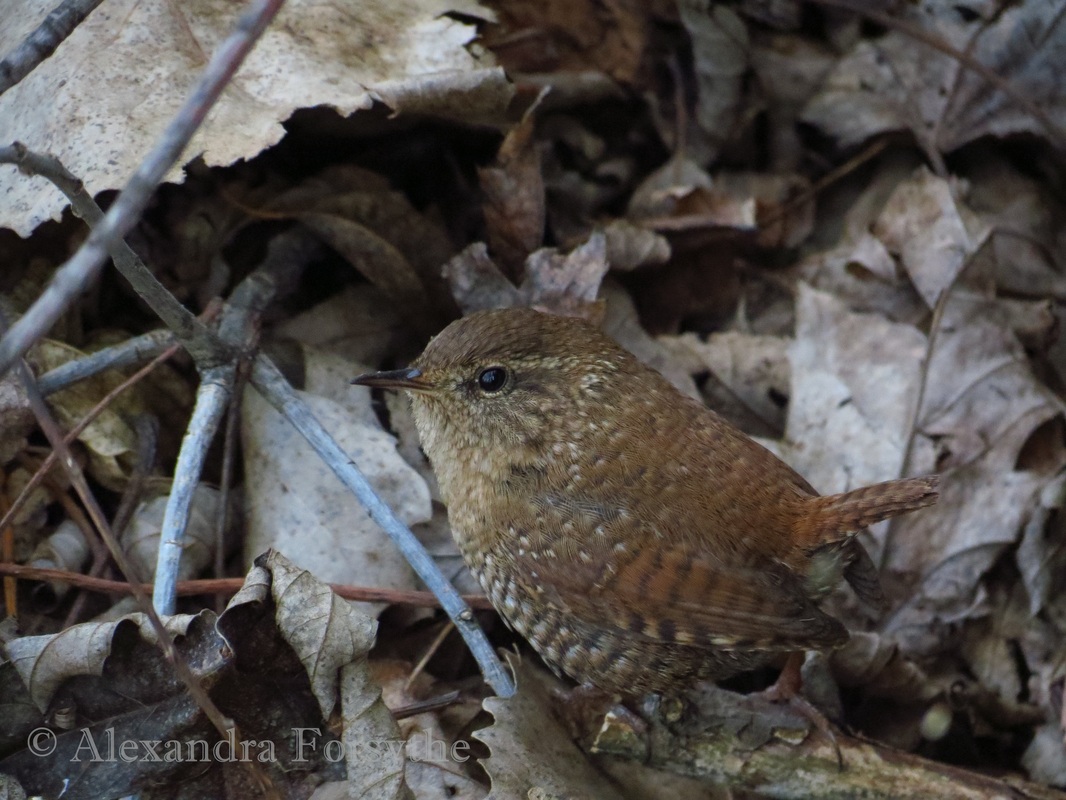
The tiny and adorable Winter Wren looks like a tiny brown ball of fluff with a very short tail that usually sticks straight up in the air. It is probably best known for what naturalist John Burroughs described as its “vibrating tongue of silver”. Its beautifully complex song is a cheerful mix with trills and twitters and it is quite high-pitched averaging around 5,500 hertz. There can be over 100 notes in a single Winter Wren’s 8-second song! Even when a recording of the song is slowed down it is hard to count all of the notes. Gram for gram, the Winter Wren sings more powerfully than a rooster; the wren uses ten times as much power to deliver its song than a rooster does! 

Winter Wrens, as their name suggests, will spend winter in Indiana and as far south as the Gulf Coast. They are often found near streams in brushy areas. The Winter Wren was split into three separate species in 2010: the Winter Wren and the Pacific Wren, both of which can be found commonly in North America, and the Eurasian Wren of the Old World. The Pacific Wren’s song is longer but not as musical as that of a Winter Wren. Where their ranges cross, male Winter and Pacific Wrens will fight over territory, but the females of each species will only choose mates from their own species. 

The uplifting song has the power to cheer us on a dreary winter’s day. Lynn Sprague said it best in “On Hearing a Winter Wren Sing in Winter”:

When wintry winds through woodlands blow
And naked tree-tops shake and shiver; 
While all the paths were bound in snow, 
And thick ice chains the merry river,

One little feathered denizen,
A plump and nut-brown winter wren,
Sings of spring-time even there 
—Tsip-twis-ch-e-e-e cheerily-cheerily-dare--
Who could listen and despair? 

Charmed with the sweetness of his strain. 
My heart found cheer in winters bluster; 
The leafless wood was fair again, 
Its ice-gems sparkled with new luster. 

The tiny, trembling, tinkling throat
Poured forth despairs sure antidote,
No leafy June hears sweeter note 
— Tsip-twis-ch-e-e-e cheerily-cheerily-dare --
The essence of unspoken prayer. 


Race 4 Birds Fundraiser

10/8/2014

3 Comments

 
Hi, I'm Alex Forsythe and I am 15 years old. I'm honored to serve on the youth board for R4B   and I'm thrilled to be able to talk to you about my experience running an R4B event.

I am also a volunteer for Soarin' Hawk Raptor Rehab in Fort Wayne, Indiana. Soarin' Hawk helps injured and orphaned raptors return to the wild. We also give presentations and classes to teach children and adults about birds of prey. All of us, even the veterinarian, are volunteers. I am the dispatcher for Soarin' Hawk, I conduct rescues, I give presentations, and I help with the birds that need intensive care or special physical therapy.

Immediately after the official launch of R4B, I approached the board of directors of Soarin Hawk Raptor Rehab about hosting and benefiting from an R4B fundraiser. They jumped at the idea without hesitation, and it's easy to see why. It appeals to just about every demographic!

Parents love it because it gets the kids out of the house, and away from their phones and video games.

Teachers love it because it encourages kids to do research, and identifying birds force s kids to fine tune their attention to detail. Those skills carry over into the classroom.

Kids love it. The athletes and competitive kids like the adrenalin rush while the quiet kids enjoy the planning, studying and listening required to be a top birder.

Sponsors love it because their advertising dollars build goodwill in the community while raising awareness about a cause or organization.

The board of Soarin Hawk recognized that R4B would have broad appeal, so we scheduled the event right away. We set our goals: 20 kids and we wanted to net $1,000.00. We exceeded both goals by 50%, but I'll tell you more about that later.

We chose a date during migration so we'd see a wider variety of birds. We also chose a starting point that was centrally located, is known to be great for birding, and is accessible to children of all abilities.

To advertise we used the social media outlets, flyers, and websites. We also sent out press releases to all of the local media. To find participants and sponsors, we contacted everyone we knew. We spoke with groups and we handed out flyers at schools, parks and businesses.

We arranged to have most of Soarin Hawk's education birds waiting at the finish line to greet the kids. We also had a buffet table set up with pizza donated by Pizza Hut and healthy snacks donated by Doud Orchards for the kids.

The finish line was inside a bird observation building so the kids could sit down and eat while watching even more birds. Meanwhile they could get their photos taken with our raptors - hawks, falcons, owls - and learn more about raptors and rehabilitation from the Soarin Hawk staff.

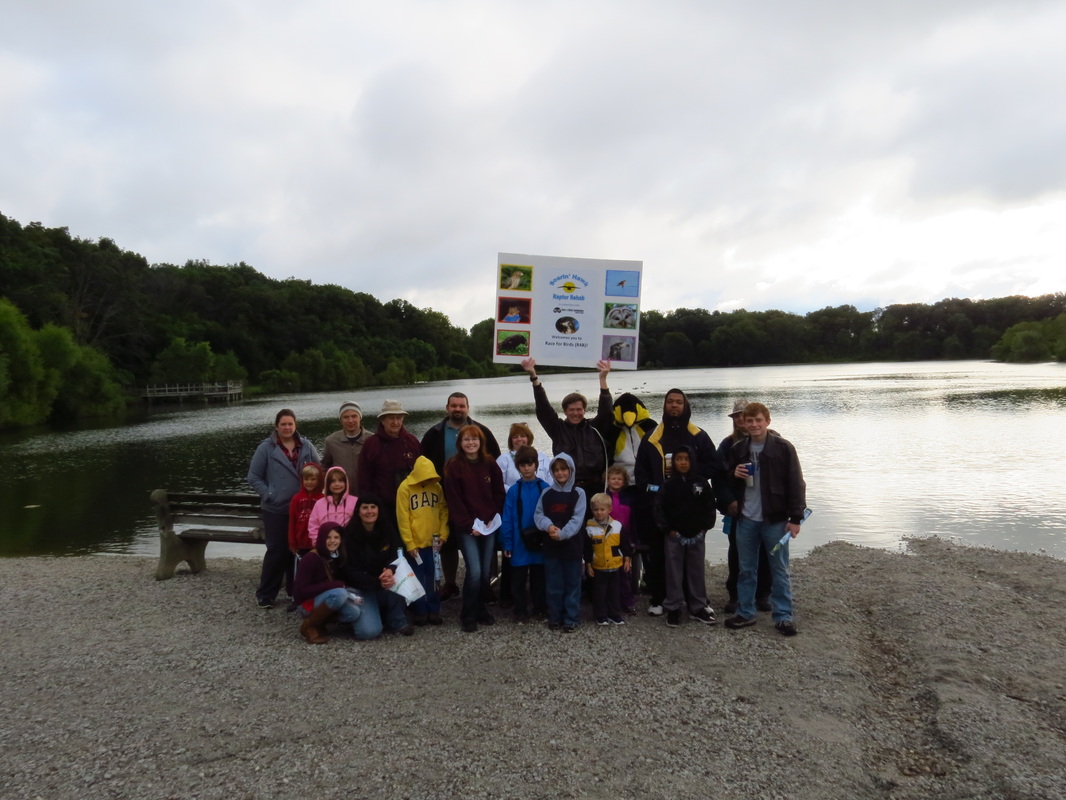
Twenty kids registered for the event, but on the day of the race we had about 50% more kids show up  than had registered - 28 children participated. A portion of the kids were unable to get to the starting line due to a road closure but they improvised and joined us as soon as they could.

I am proud to announce that we beat our goal of $1,000.00. We raised over $1,500.00 ! And that is net gain. Everything was donated - the banners, the prizes, the food, even the venue! So 100% of the money we raised will go toward the medical expenses and feeding of the birds of prey!

Soarin Hawk is so excited by the results, they want to have an R4B event every year! They would like to build a new facility, and the type of exposure R4B has brought them may help them achieve their goal so that more birds and audiences will benefit. 

Perhaps more importantly the event captured the attention of a lot of kids that had little or no interest in birds. Several of those kids are now interested in birding and becoming volunteers.

So the R4B event was a huge success on many levels.

From the beginning the board members and mentors at R4B were incredibly helpful. Any question I had was immediately answered, and the website contains everything you need to get started. The people connected with R4B are so well known and respected that the association with them was enough to gain the interest of anyone remotely familiar with birding. Our event was a  tremendous  success and we would not have been able to accomplish what we did without R4B's support.

Since I had the help of the R4B board and mentors, everything went better than expected. There are only a couple of things I would do differently. I would have the starting line and finish line be in the same location. We had them in two separate locations at the request of our sponsors. Two park systems wanted the exposure and rather than choose just one, we tried to please both of them. However having two locations caused some confusion.

I would also set a rain date. We were lucky because we had perfect weather. Next time we might not be as lucky.

I would highly recommend holding an R4B event. The level of help and expertise you have at your disposal from the website, board and mentors is unmatched. You'll increase your visibility in the community, especially among young people. You'll help children find a way to become involved with a good cause, or at least engage in an outdoor activity that will last their entire lifetime. In short, R4B will help you make a difference!

Picture
3 Comments

American Bittern

9/1/2014

 
Picture
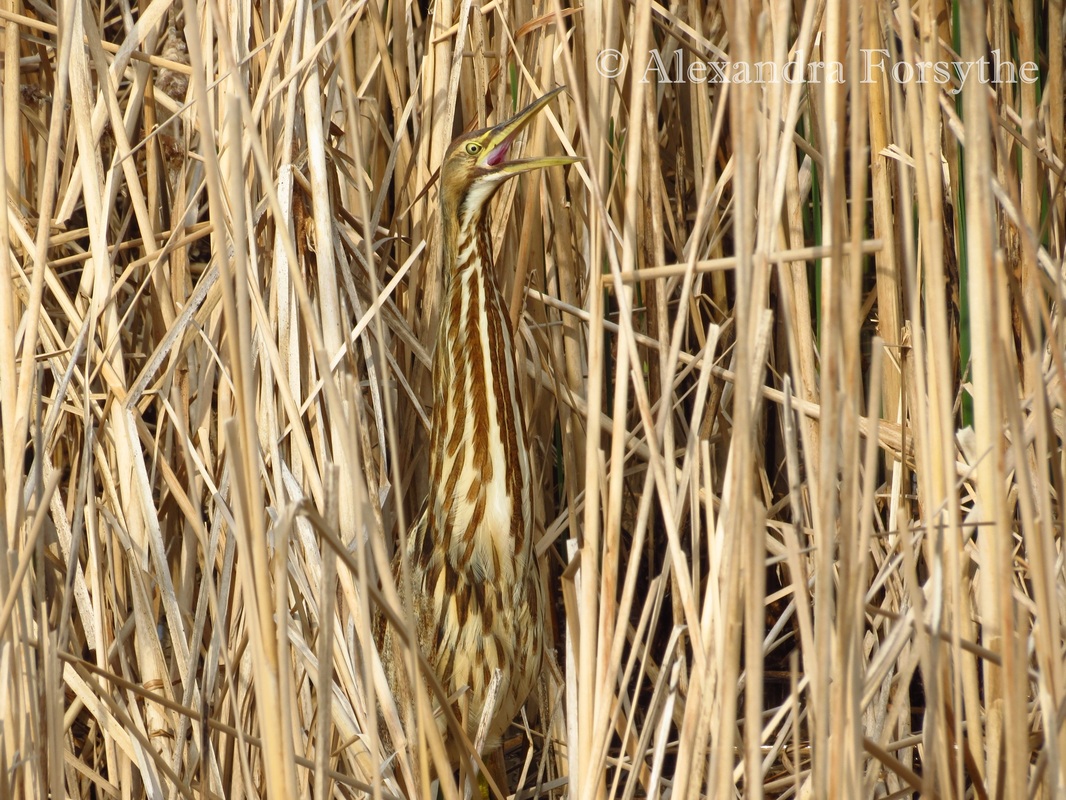
Despite its size (23” – 33” inches in length with a wingspan of 36”), this member of the heron family can be quite difficult to see. It is a master of camouflage! With the American Bittern’s thick neck and bill, yellow eyes, and stripes of brown, tan and white, it blends perfectly in the tall reeds. American Bitterns are usually solitary birds and they move slowly and fluidly through the vegetation imitating the movement of the plants (watch a video here). Even when they are actively searching for food, they do so in low light and usually use a “stand and wait” approach to hunting.

When alarmed, the American Bittern will not fly away as other herons do. Instead, it will hold perfectly still with its beak straight up in the air in an attempt to become indistinguishable from the plants surrounding it. Professor Walter Barrows was impressed with the Bittern’s ability to blend so perfectly with the swaying cattails and described his observations in “Life History of Marsh Birds”: “As we stood admiring the bird and his sublime confidence in his invisibility, a light breeze ruffled the surface of the previously calm water and set the cattail flags rustling. Instantly the bittern began to sway gently from side to side with an undulating motion which was most pronounced in the neck but was participated in by the body and even the legs. So obvious was the motion that it was impossible to overlook it, yet when the breeze subsided and the flags became motionless the bird stood as rigid as before and left us wondering whether after all our eyes might not have deceived us.”

The American Bittern has a unique, gulping “oong-ka-choonk” call that has been described as sounding like a water pump. Nutall described it as “the interrupted bellowing of a bull, but hollower and louder, and is heard at a mile’s distance, as if issued from some formidable being that resided at the bottom of the waters.” In “Summer”, Henry David Thoreau joked that the Bittern was able to make that watery call by thrusting its bill deep into the ground until it found water: “I went to the place, but could see no water, which makes me doubt if water is necessary to it in making the sound. Perhaps it thrusts its bill so deep as to reach water where it is dry on the surface. It does not sound loud near at hand, and it is remarkable that it should be heard so far. Perhaps it is pitched on a favorable key.” In fact, a specialized esophagus allows the American Bittern to make that distinctive call.

It is believed that American Bitterns migrate individually or in small groups of two or three at night. They overwinter in southern coastal areas and Central America, returning to Indiana in the spring.

Sadly, the American Bittern is endangered in Indiana due to habitat loss. Studies have found that American Bitterns require at least 6 acres of wetlands in which to nest, but such wetlands are now difficult to find in Indiana. Indiana is fourth in the nation in percentage of wetlands lost: 87% since the 1780’s. The vast majority of the loss has been due to drainage for agriculture. Fortunately, there are programs in place to restore wetlands. For example, the U.S. Fish and Wildlife Service and the USDA (NRCS) have programs that will reimburse landowners up to 100% of the expenses incurred for the restoration of wetlands, and the Indiana Heritage Trust has acquired thousands of acres through the environmental license plate program. There are also conservation organizations like ACRES Land Trust that preserve important habitats. With such programs and organizations in place, the American Bittern may one day become more common in Indiana and be removed from our state’s “State Endangered” list.


The 100 year anniversary of the  death of the last Passenger Pigeon

9/1/2014

 
Exactly 100 years ago today, Martha, the last Passenger Pigeon in the world, died in the Cincinnati Zoo. At one time, 3 to 5 billion Passenger Pigeons lived in the United States (constituting 25% of the U.S. bird population), but in just 40 years they were driven to extinction. Most people thought they were too abundant to ever be at risk of extinction. They were wrong. 

In Soarin’ Hawk, when rescuing raptors I often hear, “Why bother? They’re a dime a dozen. Just let it die.” Most injuries to raptors are caused directly or indirectly by humans. It is our duty and obligation to learn from our mistakes and change the attitudes we had toward birds when Martha died. 

Joel Greenberg (author of the must-read book, “A Feathered River Across the Sky”) and Project Passenger Pigeon (PassengerPigeon.org) are spreading the word, making certain that we remember Martha and her cautionary tale: no matter how abundant or strong a species may seem, it can and will go extinct if humans do not act appropriately. 

In Indiana, we are fortunate to have several organizations doing so much to help birds and nature in every way they can: Indiana Audubon Society, Stockbridge Audubon Society, Tippecanoe Audubon Society, Robert Cooper Audubon Society, Friends of the Limberlost, ACRES Land Trust, Indiana DNR, Soarin’ Hawk Raptor Rehab, Race 4 Birds Foundation (their first event will be held in Fort Wayne) and many more. I am so grateful to Mr. Greenberg and to all of people and organizations that are trying to make certain that we do not repeat the same mistakes that we did with the Passenger Pigeons!

Chimney Swifts

8/3/2014

 
Picture
Looking for a home blessing? Try this one: “Grant to this chimney a swallow.” If you have Chimney Swifts in your chimney, you are indeed blessed! 

These talented acrobats consume a tremendous number of mosquitoes, flies, flying ants and termites daily. Each Swift will eat a third of its body weight in these harmful insects each day; five nestlings can eat 12,000 insects per day! 

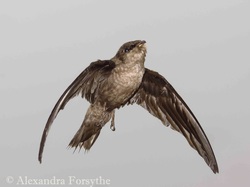
Chimney Swifts are often called "flying cigars" due to their appearance. They are almost 5” long, almost black, and have lighter, brownish-gray throats. Each of their scythe-shaped wings is the length of their entire body but appear very thin when they are roosting. 

Swifts are in the Apodidae family which means “without feet”. They eat and drink while in flight, never on the ground. They even bathe in flight! They glide down to the water, smack the surface with their body, then bounce up and shake the water off as they fly away. They fly almost constantly except when roosting overnight and nesting. They never sit on a perch like other birds; their long claws and specially designed feet are adapted for clinging to vertical surfaces, not for perching. The claws on their feet act like grappling hooks. The tail is also designed for clinging to vertical surfaces. The tail feather shafts extend as stiff, exposed spines to support the birds as they roost. Its genus name Chaetura comes from the Greek word “chaite”, meaning spine, and “oura”, meaning tail.

Breeding season runs from May to July. The 4” wide half-cup nest is constructed and attached to the wall of the chimney using a mixture of woven twigs and very sticky saliva from a gland under the bird’s tongue. The twigs are broken off and collected while the birds are in flight. The nest can take up to a month to construct. The nestlings are fed by both parents, and other unmated birds often help raise the young. Two to three weeks after hatching, the young outgrow the nest and must cling to the wall. They can fly 30 days from hatching and can live up to 14 years in the wild.

Sadly, the Chimney Swift population has declined 65% since 1966. In nature, they roost in large, hollow trees, but there are very few such trees left. As a result, the Swifts adapted to live in masonry chimneys, but people started to cap their chimneys and use metal flues and inserts, preventing the Swifts from roosting. Be sure to use Swift-friendly chimney caps or build and install a Chimney Swift Tower. 

Shortly before migrating south for the winter, they will collect in large groups, sometimes numbering in the hundreds or thousands, circling for an hour or so before sunset. Chief Pokagon of the Potawatomi Indians wrote poetically about the Chimney Swifts and their whirling flight before they roost for the night: “Their twittering notes and whizzing wings create a musical, but wild, continued roar...The twittering, whizzing roar continues to increase; the revolving circle fast assumes a funnel shape, moving downward until the point reaches the hollow in the stub, pouring its living mass therein until the last bird dropped out of sight.” To watch a video of migrating Chimney Swifts, click here.

Every neighborhood should be graced with the presence of these beautiful, acrobatic birds. Every child should have the chance to watch their spectacular flight patterns. Be sure to attend the Chimney Swift Program at Limberlost on August 9, 2014 (http://limberlost.weebly.com/) to learn more about the Swifts, engage in fun activities, and watch the Swifts as they entertain you in the skies above!

Wiggle!

7/20/2014

 
Wiggle is a Turkey Vulture who was hit by a car. Shortly after he had been hit, some wonderful people who lived nearby carefully moved him off of the road and called Soarin’ Hawk Raptor Rehab. Since he was close to my home, the Soarin’ Hawk dispatcher asked us to pick him up.  

When we arrived I was really worried. I thought he was dead. He was lying in an awkward facedown position, eyes closed, with flies buzzing around him. He did not move at all when we approached him; there wasn’t so much as a flicker of the eyelids. The kind people who had found him were upset that he had apparently passed, and we tried to comfort them by saying that even the deceased raptors can help save the lives of the others. For example, we imp (attach) the feathers onto the broken feathers of otherwise healthy birds to allow them to fly until their own feathers grow in.

When we picked up his limp body, one eye snapped open. He was alive! I was so relieved! The rest of his body remained limp and unresponsive, but there was hope! We put him in the special “Raptor Carrier” and I sat with him and talked to him quietly during the long 40-minute drive to the vet’s office.

The veterinarian for Soarin’ Hawk took us in immediately and she demonstrated how to manually check for broken bones, dehydration and other common injuries. She also took several x-rays to make sure that he had no internal injuries. Miraculously, all Wiggle had was a severe concussion! The vet moved him to a cage so that he could rest and recover and she put a towel doughnut around him to keep his head up. I was, of course, very happy that he was ok, but I was still worried about him. The vet monitored Wiggle carefully for a couple of days then transferred him to Soarin’ Hawk’s personalized care area, where someone could watch him night and day, away from the risk of ill birds, parasites and other risks to his recovery. At that point, we discovered that Wiggle was not a fan of old meat; he preferred fish and meat that was fresh from the store! Our picky little vulture was clearly feeling better! He was moved to Soarin’ Hawk’s main raptor rehabilitation center to begin his creance (practice and conditioning) flights.

All raptors brought to Soarin’ Hawk have to do multiple practice flights to ensure that they can be released. Wiggle did not fly very far at first. As he practiced he began to regain his strength so that he could fly further and further until, after spending two weeks with Soarin’ Hawk, he could take the entire line multiple times in a session. I was so proud of him!

The veterinarian watched his final flight and decided that he was able to be released! We drove him back to the area in which he was found. When he was returned home he did not want to leave at first. After spending some time resting in the field and having one last meal he said goodbye to his new human friends and flew off to join his feathered family. I almost cried, partly because I was happy for him, but also because I already missed him. Have a long, safe life, Wiggle! 

Things with wings

7/1/2014

 
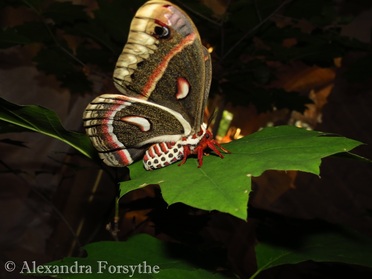
PictureCecropia Moth
It’s easy to become captivated with birds. They are amazing animals! Who hasn’t dreamed of being able to fly like an eagle? Plus, they’re easy to see; birds are all around us. However, if we look a bit closer to the ground we can see many of those same wonderful qualities in much smaller creatures: butterflies, moths, dragonflies and damselflies.

I attended the second annual Mothapalooza conference this weekend. The focus is on moths, but it also covers butterflies, dragonflies, damselflies and birds. What a wonderful experience, due in large part to the Herculean efforts of the organizer, Mary Ann Barnett. There was something for everyone from night owls to early birds and novices to experts. The people were so friendly it felt like I had known them for a long time even though we just met.

Moths were the stars of the show, and rightly so. Compared to butterflies, we know very little about moths, but we’re learning much more thanks to the efforts of David Wagner, Jim McCormac and other experts. What we do know is that moths are important pollinators and are crucial to a sustainable ecosystem. All of us are concerned about the decline of honeybees and the effect of that decline on our food supply, but attention must be paid to the other pollinators, as well, including the nocturnal pollinators. While they deserve respect for the services they provide for us, it’s hard not to smile when you learn about some of their unique adaptations. Many moths practice mimicry to perfection, appearing as bird droppings or even imitating a spider so well that spiders are intimidated by it. Some of them can cause quite a bit of pain to anyone who touches them, while others have developed effective clubs with which to battle predators. That’s pretty clever for a fuzzy insect or squishy caterpillar!

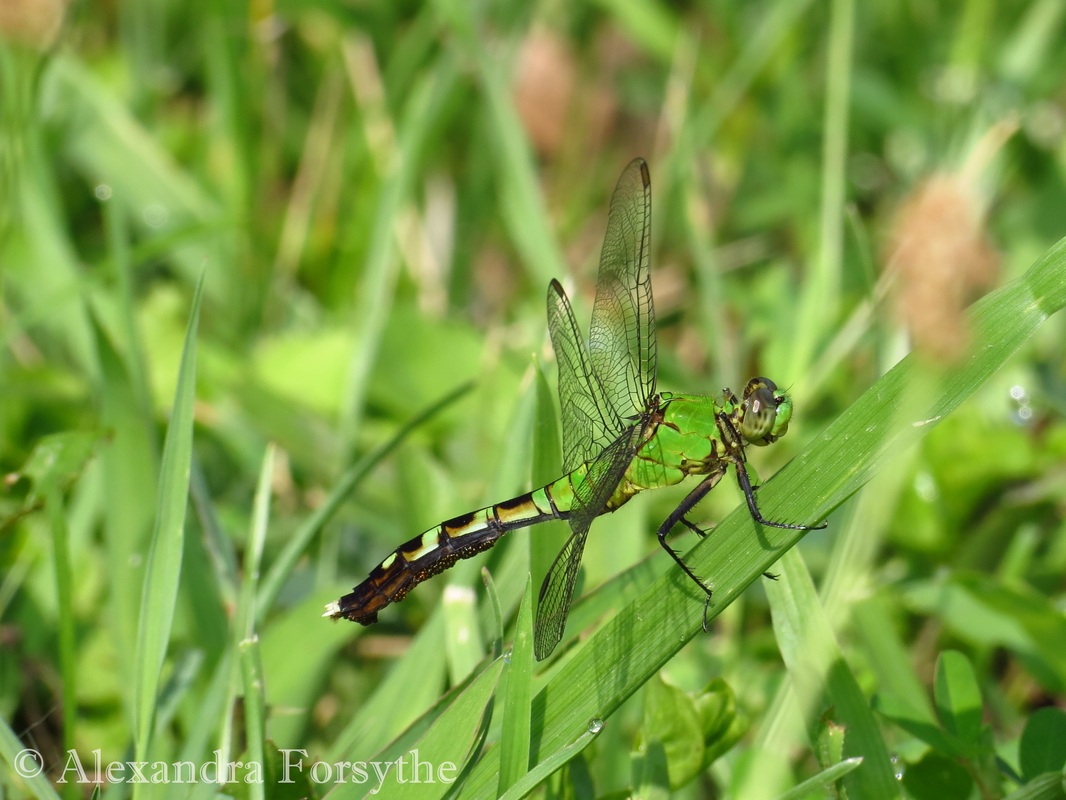
While moths are usually thought of as fuzzy and cute, dragonflies are often thought of as the tigers of the pond. Despite their delicate appearance, they are expert hunters valued for their ability to control mosquito populations. They are among the most successful predators on the planet. Most predators are satisfied if they catch half of the prey they pursue. Not so with the dragonfly. Studies show that they can snag their prey over 95% of the time. They can reach speeds of 30 mph, and their vision may be the best in the insect world. Some of them migrate as far as birds: 10,000 miles per year!

Being a birder, I of course went on the birding field trips during the conference. However, since the leaders of the trips and other attendees were all experts in a variety of fields from botany to entomology, there was always something to admire and a multitude of opportunities in which to learn. If we didn’t see a bird, we’d cast our gazes a few feet downward to discover other treasures. Never a dull moment!

I learned a lot during Mothapalooza. More importantly, I made many new friends with a breathtaking wealth of knowledge. I had a fantastic time and I am looking forward to next year!


Picture
Common Pondhawk

Peregrine Falcon Banding

6/15/2014

 
Picture
As storm clouds crept closer, John Castrale bravely climbed out onto the roof of One Summit Square in Fort Wayne, Indiana. The storm was the least of his concerns. Angry Peregrine Falcons relentlessly attacked him from the air. With their sharp beaks and talons, they were determined to remove the kidnapper who threatened to steal their chicks. The birds had a right to be upset; John Castrale was there to take their chicks away. However, his intentions were pure. He was only there to band them.

It was May 28 in Fort Wayne, banding day for the three Peregrine Falcon chicks. These chicks follow a long line of successful broods. Dozens of chicks have successfully fledged from One Summit Square thanks to the generous support of AEP, the DNR, and Soarin’ Hawk Raptor Rehab.

We’re very fortunate to have these birds in Indiana. As recently as 1965, there were no Peregrines nesting east of the Mississippi, and western populations had declined 90%. After DDT was prohibited and conservation groups like the Peregrine Fund were established, the Peregrines began to recover. Not until 1989 did Indiana have a nesting pair of Peregrines.

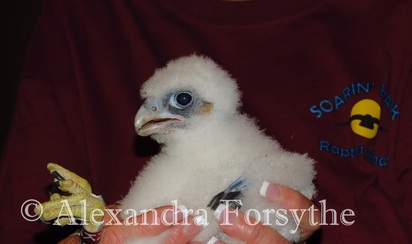
This year, all three of Fort Wayne’s chicks are male and they received their names the moment they were banded: Abbett, Magic and Cheetah. The names were chosen by the students of Abbett Elementary School in Fort Wayne, and many of students were on hand to witness the banding, applauding loudly when each name was announced.

When each chick is banded, blood is drawn from its wing for research purposes. They are dusted to cut down on the population of feather mites and they are checked for overall health. The sex of the chick is determined by the size of its feet and the thickness of the tarsus (as with most raptors, females are larger than males).

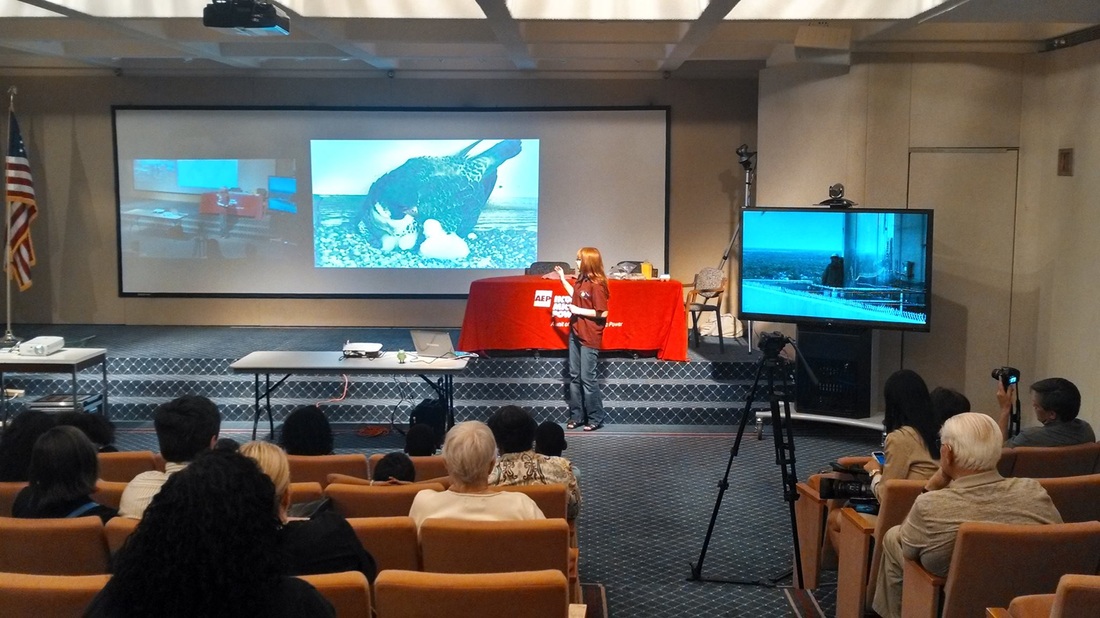
Nancy, an adult Peregrine who serves as an education bird, was introduced to the crowd by Soarin’ Hawk Raptor Rehab. It gave the audience a rare up-close look at these magnificent birds. I got to speak with the audience about the Peregrine’s amazing adaptations, like the tomial tooth and the tubercles that allow the bird to kill and fly with such skill.

After a brief walk around the room for photo opportunities, the chicks were returned to their parents, Jamie and Moxie. This year’s chicks appeared healthy and well on their way to becoming master hunters of the sky.


Picture

Is the Biggest Week really the biggest week?

5/11/2014

 
PictureBirding by ear with Michael O'Brien
I attended the Biggest Week in American Birding this year in northwest Ohio. It takes place at a stopover point for migratory birds that are attempting to cross the Great Lakes, so there are a wide variety of birds. But is it the "biggest week"? Yes! In many ways it is!

You will see a lot of bird species in a very short period of time, and most of those species will be in a small, easily accessible area. Often the birds will be at or near eye level and they will be close enough to easily identify. However, the number and proximity of birds is not what makes this the biggest week in my opinion. It is the biggest week because of the people.

Kim and Kenn Kaufman and the people at Black Swamp Bird Observatory have created an event that includes something for everyone. There are educational presentations, guided bus tours, auto tours, boat tours, bird hikes, and a large number of expert birders on hand in most locations to help you. When you attend the event, you'll be surrounded by enthusiastic birders of all levels from beginner to expert. There's an instant feeling of family as you run into old friends and make new ones.


You'll meet some extremely talented birders. For example, I met Deb Neidert, a guide who makes birding fun and exciting. I also got to go birding by ear with Mr. Michael O'Brien, co-author of the Shorebird Guide and the Larkwire app. He's an outstanding teacher and an unbelievably talented birder.


The entire event is designed to increase each attendee's love and appreciation of birds, and it certainly succeeds! The activities and enthusiasm continue to grow each year, making this the undeniable Biggest Week in American Birding!

<<Previous
Forward>>

    Author

    Alex Forsythe

    Archives

    May 2020
    April 2020
    July 2016
    May 2016
    March 2016
    February 2016
    October 2015
    July 2015
    June 2015
    May 2015
    April 2015
    March 2015
    February 2015
    January 2015
    December 2014
    November 2014
    October 2014
    September 2014
    August 2014
    July 2014
    June 2014
    May 2014
    April 2014
    February 2014
    November 2013
    October 2013
    August 2013
    July 2013
    May 2013
    February 2013
    December 2012
    October 2012

    Categories

    All

    RSS Feed

Powered by Create your own unique website with customizable templates.